
Evaluates hash functions and returns a fixed-size alphanumeric string.
Accepts a string value X as input and returns the md5 hash of the string value. The md5 is a hash function that generates a 128-bit hash value of the string.
Syntax:
| process eval("identifier=md5(X)")
Example:
| process eval("hash=md5(device_name)")
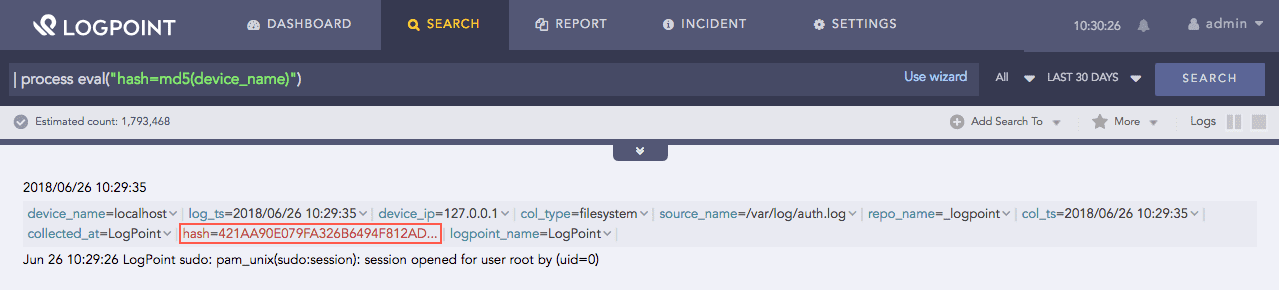
Using md5 function
Here, the query converts the device_name field value into its corresponding md5 hash value and returns the value 421AA90E079FA326B6494F812AD13E79 in the hash identifier.
Accepts a string value X and returns the sha1 hash of the string value. The sha1 is a cryptographic hash function that generates a 160-bit (20-byte) hash value, typically rendered as a hexadecimal number, 40 digits long.
Syntax:
| process eval("identifier=sha1(X)")
Example:
| process eval("sha1_value=sha1(device_name)")
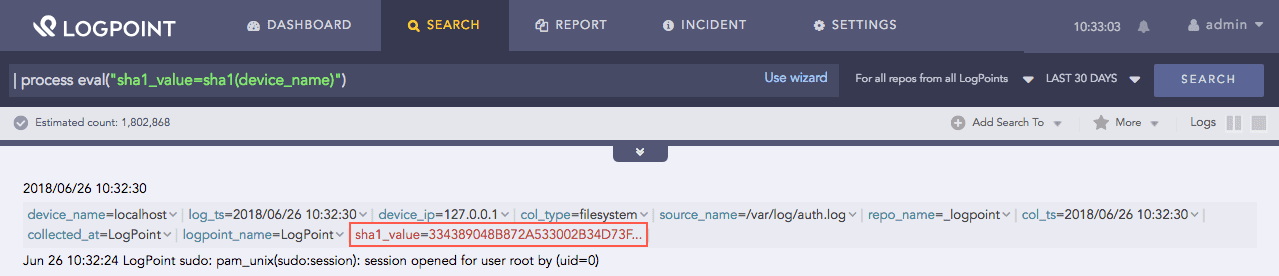
Using sha1 function
Here, the query returns the corresponding sha1 hash value of device_name* in the sha1_value identifier.
Accepts a string value X and returns the sha256 hash of a value. The sha256 is a cryptographic hash function that generates an almost-unique 256-bit (32-byte) hash value, typically rendered as a hexadecimal number, 64 digits long.
Syntax:
| process eval("identifier=sha256(X)")
Example 1:
| process eval("sha256_value=sha256(device_name)")
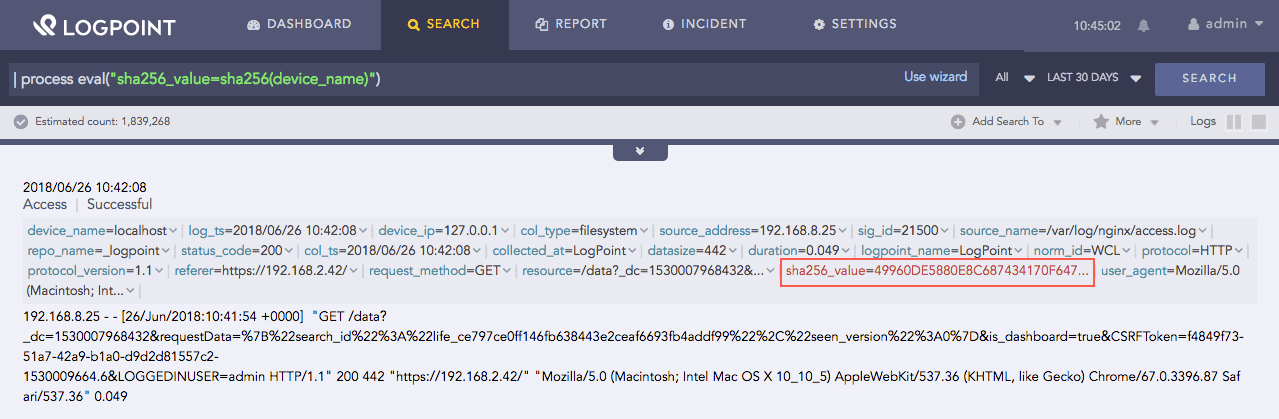
Using sha256 function
Here, the query returns the corresponding sha256 hash value of the device_name in the sha256_value identifier.
Accepts a string value X and returns the sha512 hash of a value. The sha512 is a cryptographic hash function that generates an almost-unique 512-bit (32-byte) hash value, typically rendered as a hexadecimal number, 128 digits long.
Syntax:
| process eval("identifier=sha512(X)")
Example:
| process eval("sha512_value=sha512(device_name)")
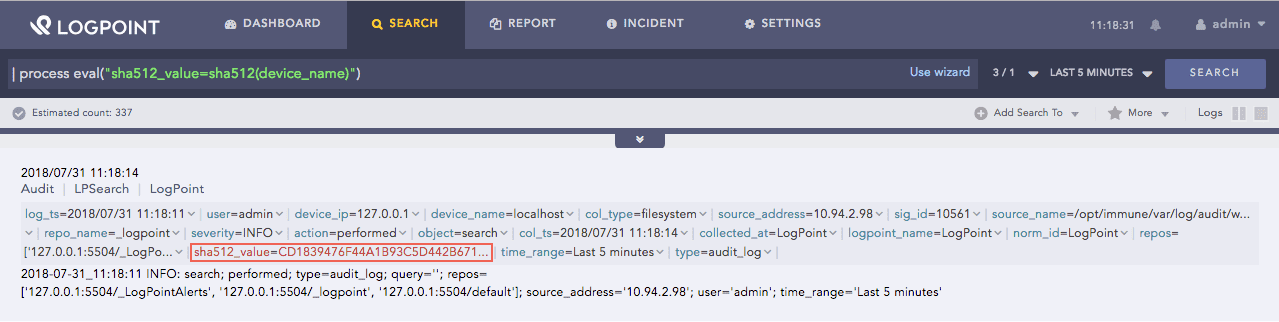
Using sha512 function
Here, the query returns the corresponding sha512 hash value of the device_name in the sha512_value identifier.