Logpoint APIs let you interact directly with the system functionalities. Currently, Logpoint exposes the following two APIs:
Search API
Search API endpoints enable you to search for logs and retrieve search information. You can retrieve information related to user timezone, Logpoints, devices, and repos from the Logpoint servers.
Incident API
Incident API endpoints enable you to perform incident-related actions and retrieve incident information. You can retrieve information like incident id, incident states, incident user name, and incident user groups.
Logpoint APIs comply with the Representational State Transfer (REST) architectural style. It facilitates retrieving information from the endpoints exposed using the HTTP protocol. Logpoint APIs work on the Request-response principle. You can use the cURL tool or any REST client browser to request information and receive responses from the servers. You can also implement custom features by accessing the APIs using HTTP libraries of programming languages.
For authentication and authorization, the Logpoint API requires two request parameters:
username, which includes a Logpoint username. Your access control for using the APIs is the same as your user roles in the system
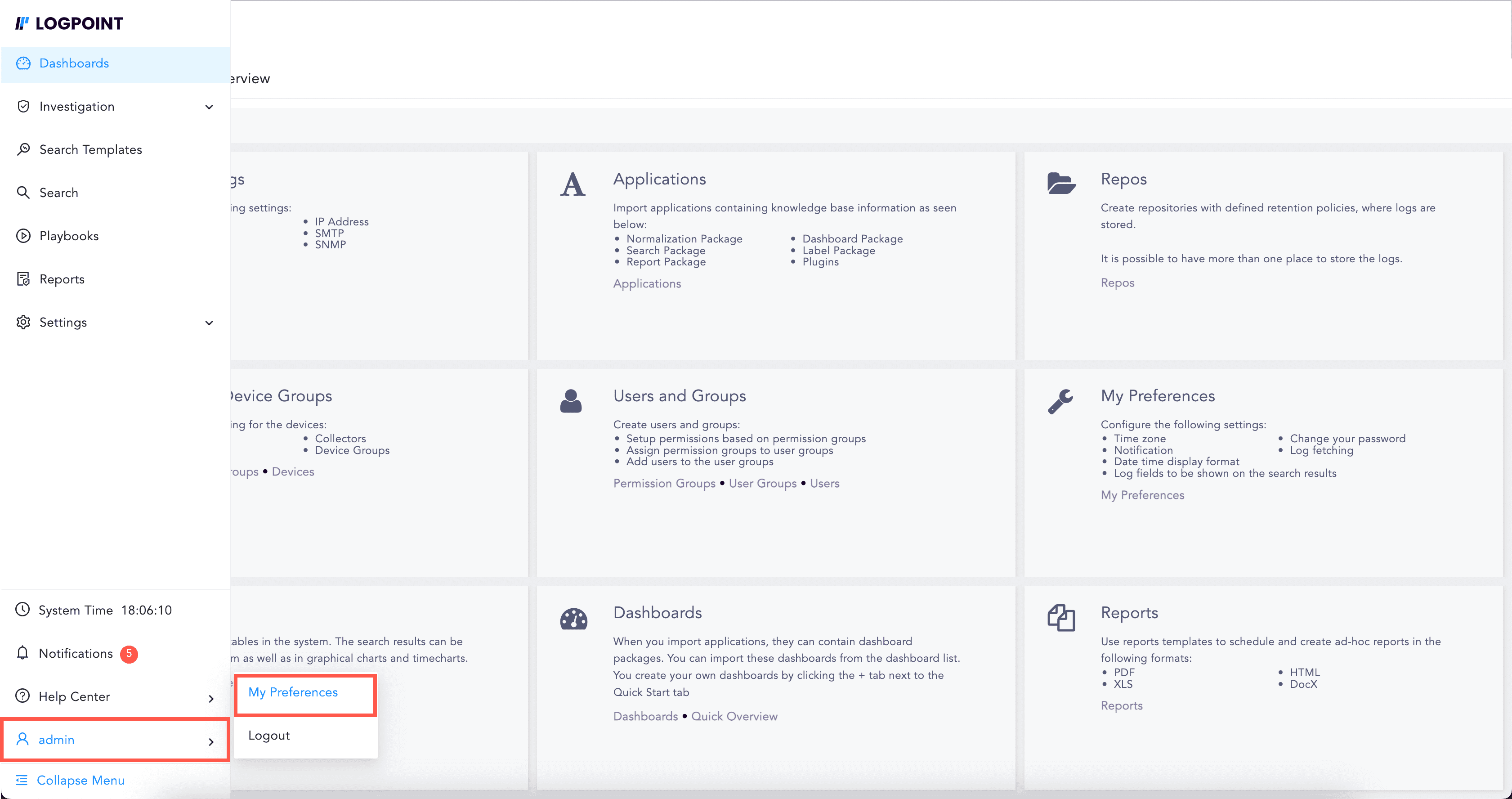
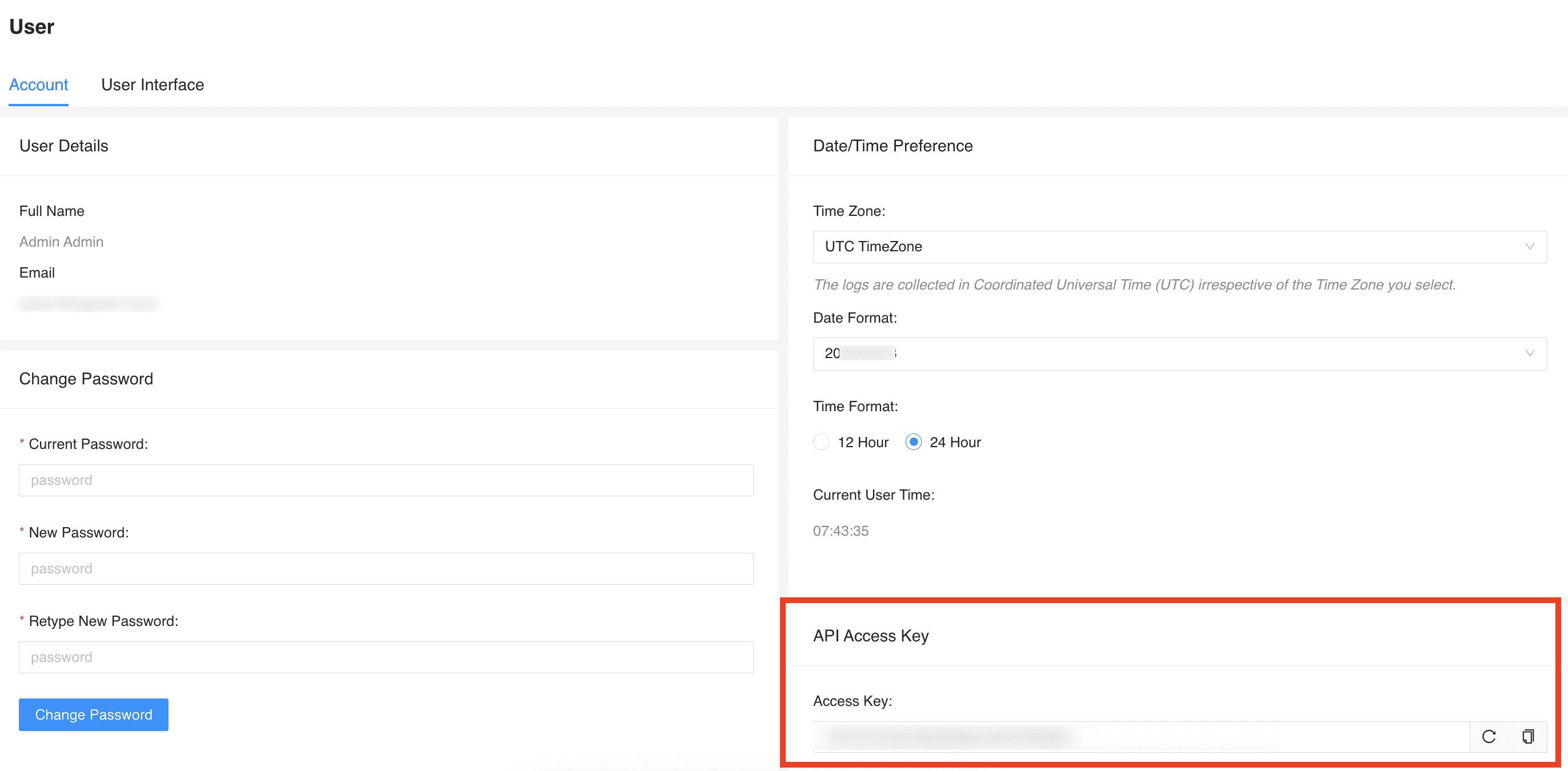
secret_key, which is the access key to uniquely identify you as an authorized user.
Logpoint APIs support JSON with UTF-8 encoding. You can forward either a JSON array or a JSON object in a request. The request methods supported are POST and GET methods. The output response is always a JSON object.