
Click Configure in the navigation bar.
Under Entities, click Normalization Policies.
Select a Logpoint to create the normalization policy. You can select multiple Logpoints of different pools.
Click Next.
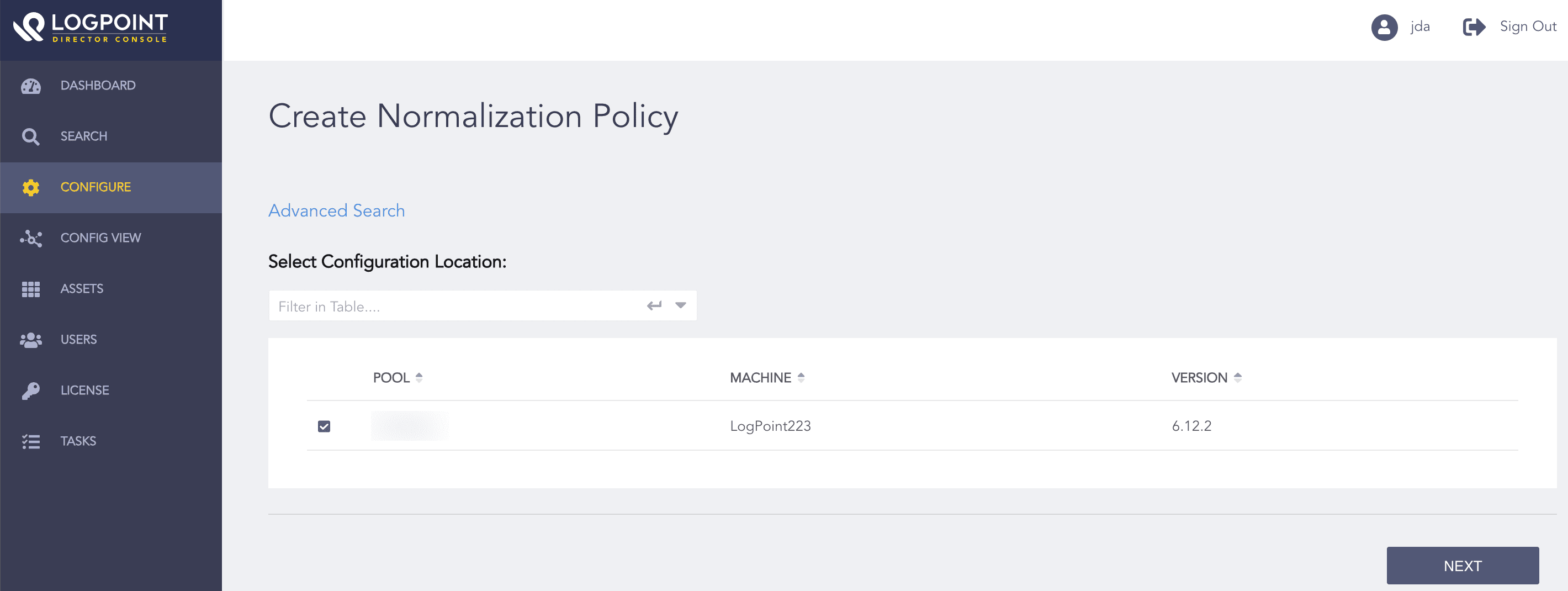
Selecting Logpoint
Enter a Name.
Select GSuiteCompiledNormalizer from the list of compiled normalizers, and click Add to List.
Click Next.
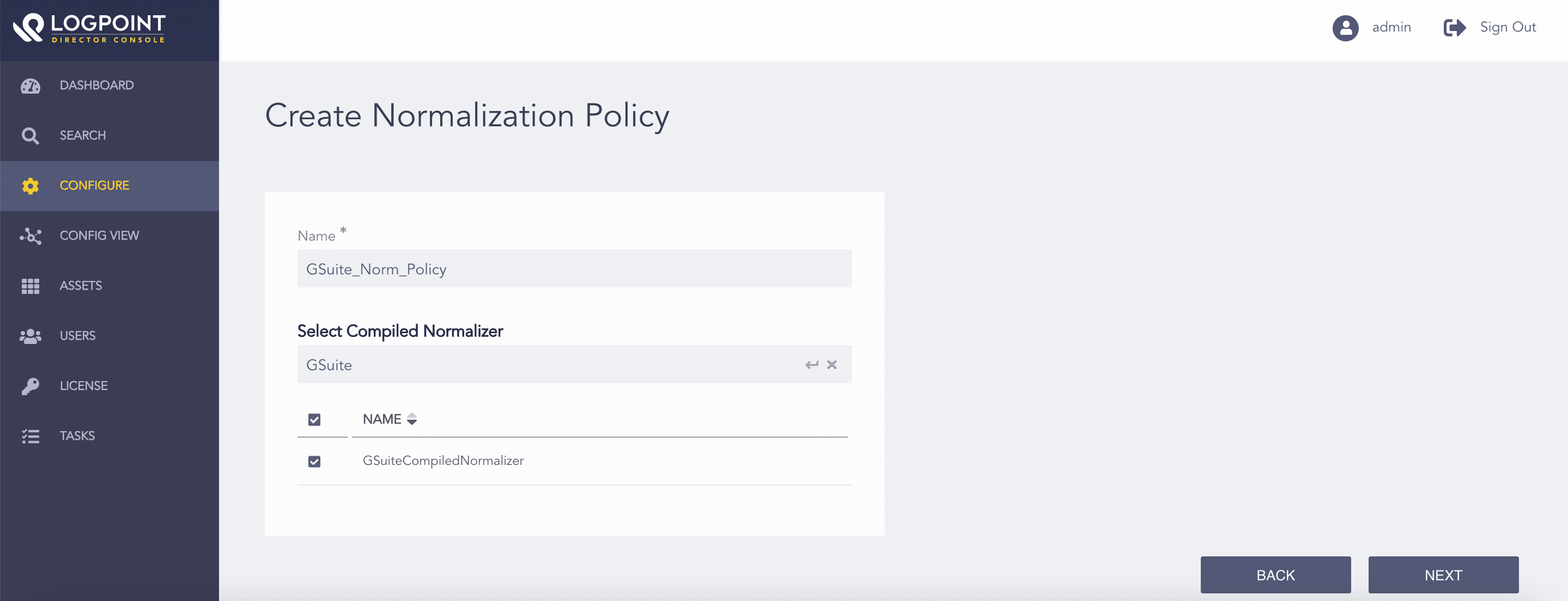
Adding a Normalization Policy
Review your changes. You can go Back to make any changes if necessary.
Note
Click Download Report to get the summary as a PDF.
Click Finish and click OK to confirm.
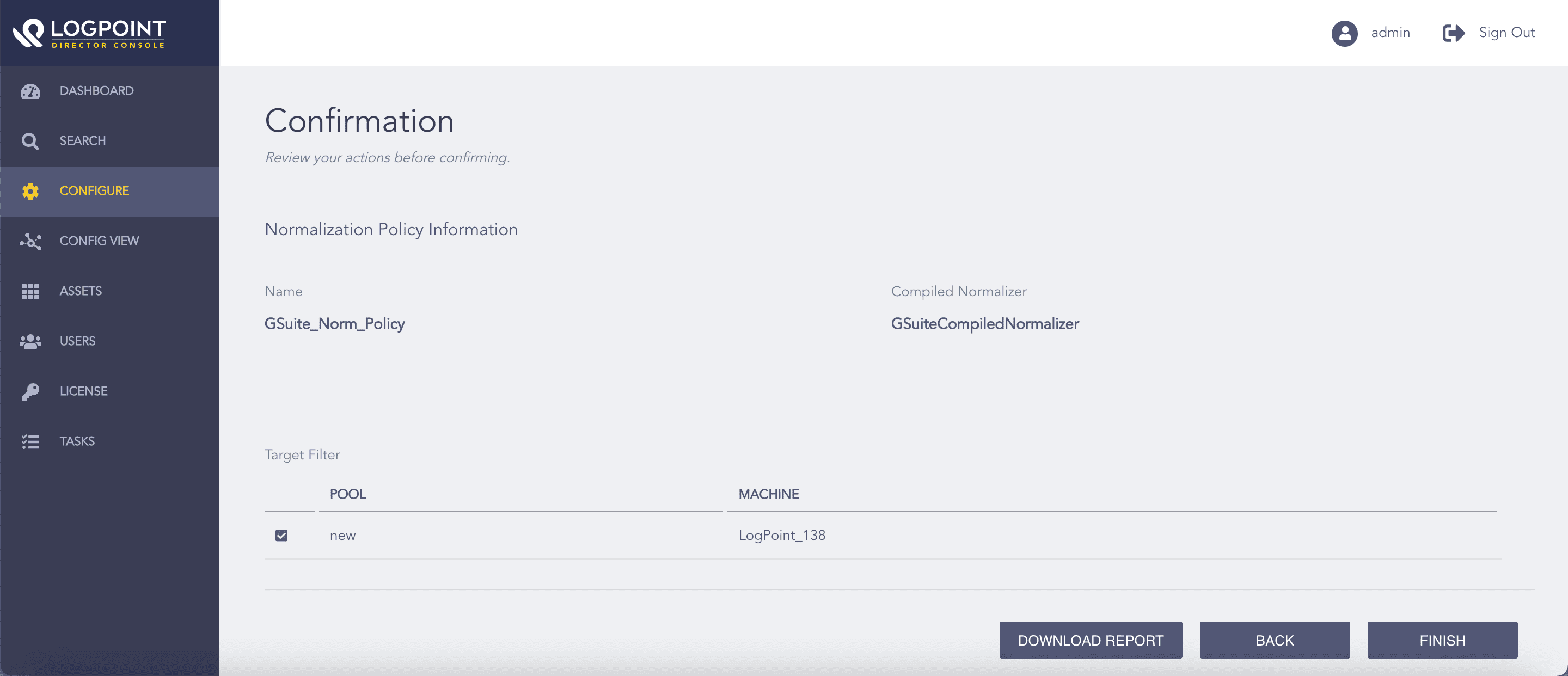
Confirming the Changes
To configure the GSuite Fetcher, you must create a service account in the google cloud console and give the required authorization to your project in google admin. Go to Appendix for details.
To configure the GSuite Fetcher:
Click Configure in the navigation bar.
Under Settings, click Plugins.
Select GSuite Fetcher from the Select Plugin Type drop-down.
Select Logpoint to configure the GSuite Fetcher. You can select multiple Logpoints of different pools.
Click Next.
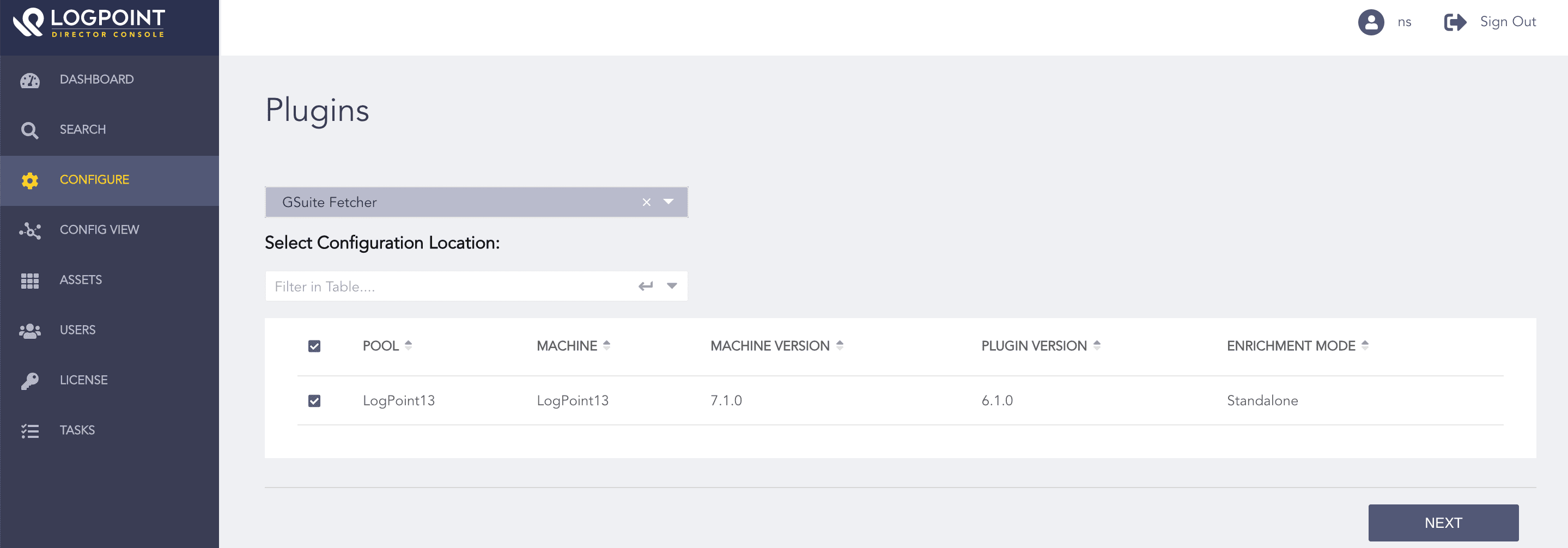
Selecting Logpoint
Select Create.
Upload the G Suite service account’s private key JSON file in Key File. Go to Appendix to get information on obtaining it.
The Project ID, Private Key ID, Private Key, Client Email, and Client ID fields are auto-filled after you upload the credential file.
Enter the G Suite admin users email ID in User Email.
Select the Fetch Interval (minutes).
Select the Charset.
Select a Processing Policy.
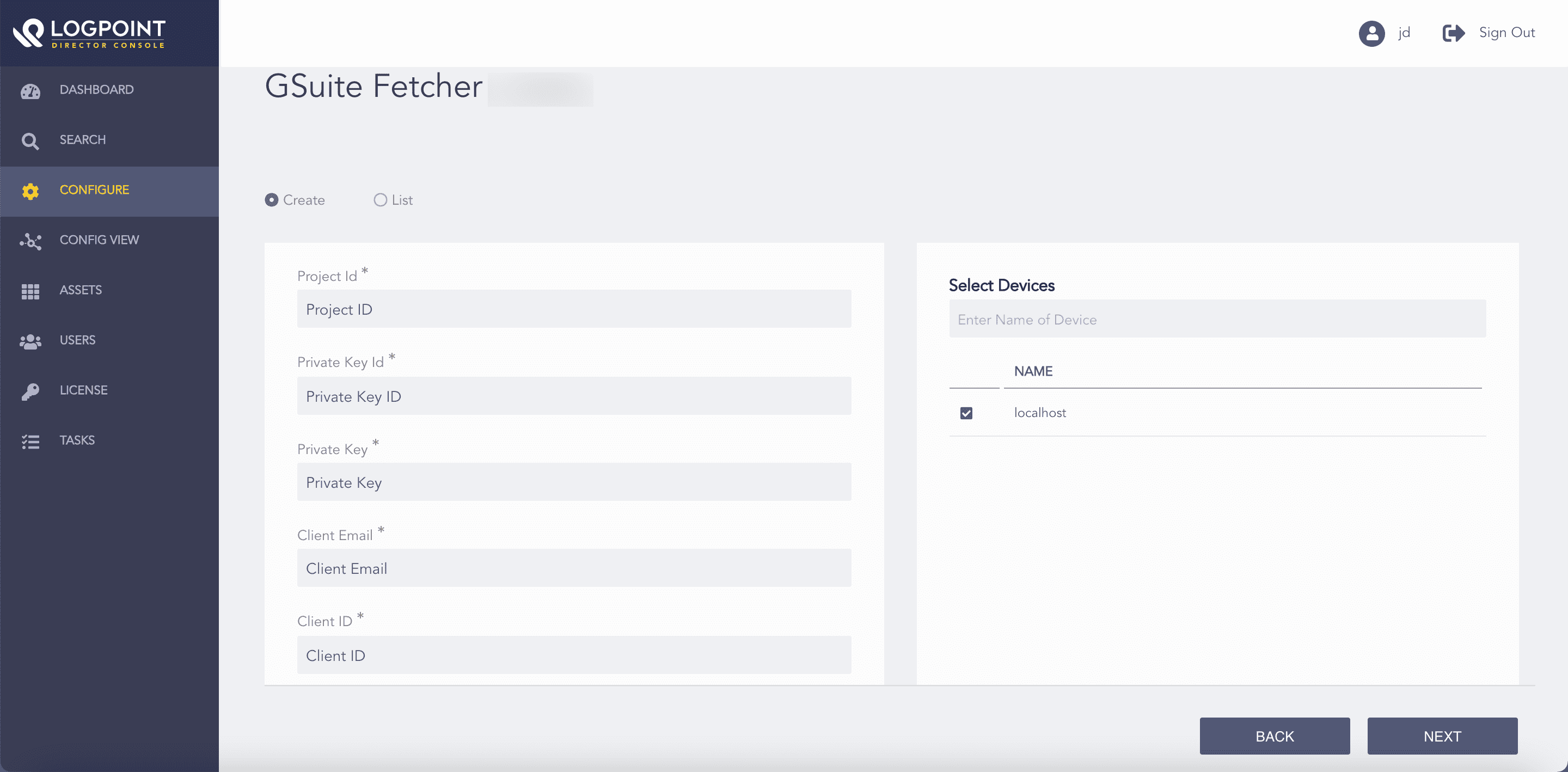
Configuring the GSuite Fetcher
Select Enable Proxy to use a proxy server.
In Proxy Configuration:
13.1. Enter the proxy server IP address and Port number.
13.2. Select HTTP or HTTPS protocol as required.
Click Next.
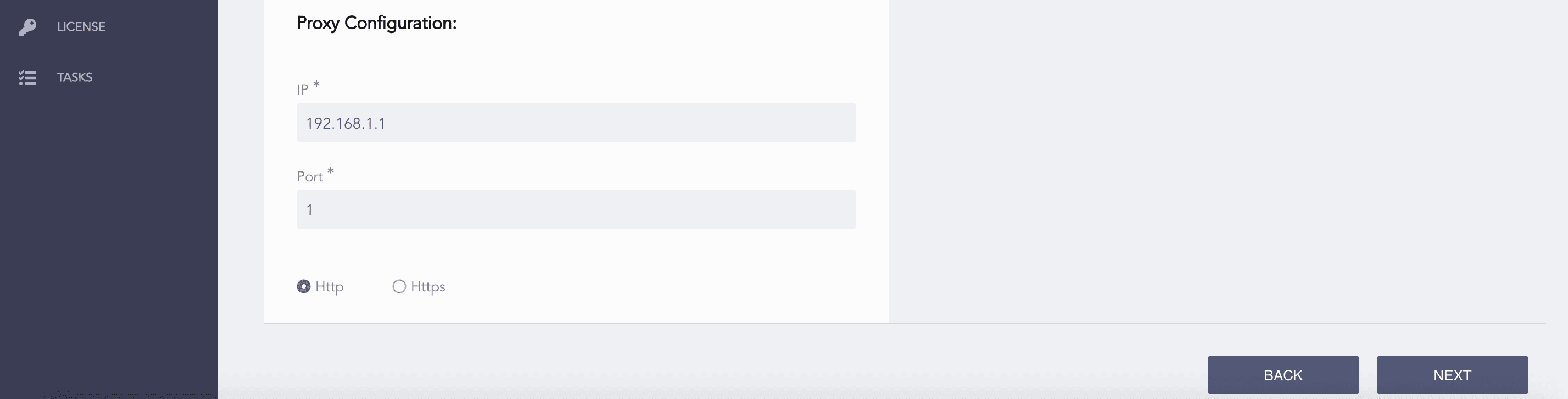
Enabling Proxy
Review your changes. You can go Back to make any changes if necessary.
Note
Click Download Report to get the summary as a PDF.
Click Finish and click OK to confirm.
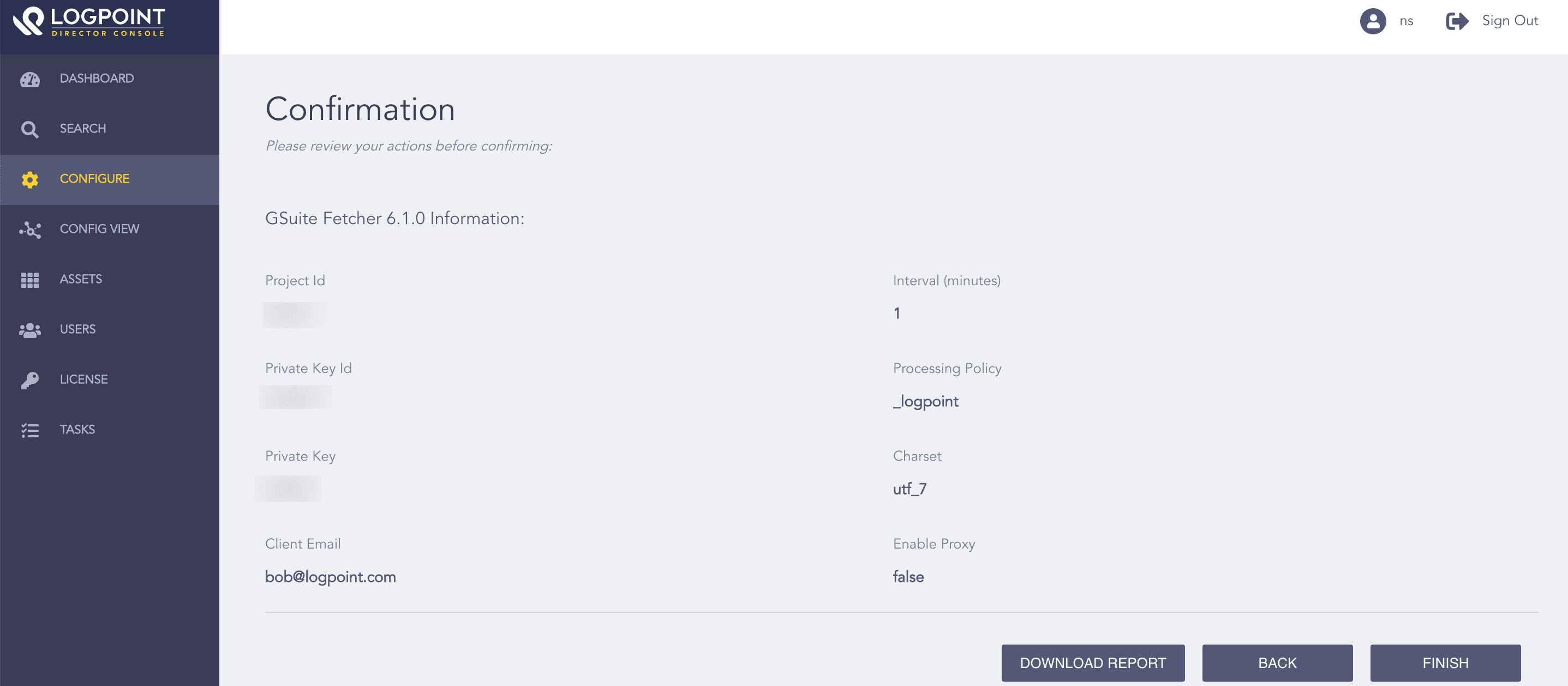
Confirming the Changes
Click Configure in the navigation bar.
Under Settings, click Plugins.
Select GSuite Fetcher from the Select Plugin Type drop-down.
Select the Logpoint where GSuite Fetcher is configured. You can select multiple Logpoints of different pools.
Click Next.
Selecting Logpoint
Select List.
Note
The page lists only the configurations that are common to all the selected Logpoint.
Click the Edit icon for the configuration from Action.
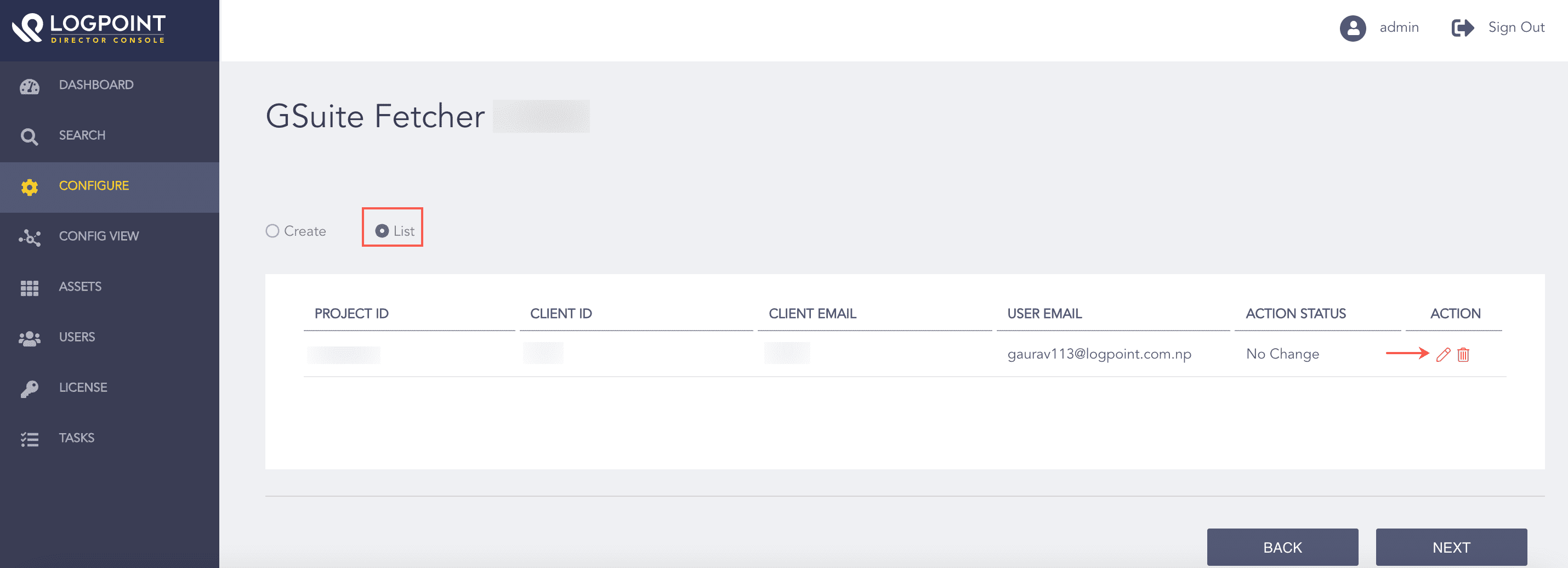
Editing the GSuite Fetcher Configuration
Make the necessary changes and click Edit.
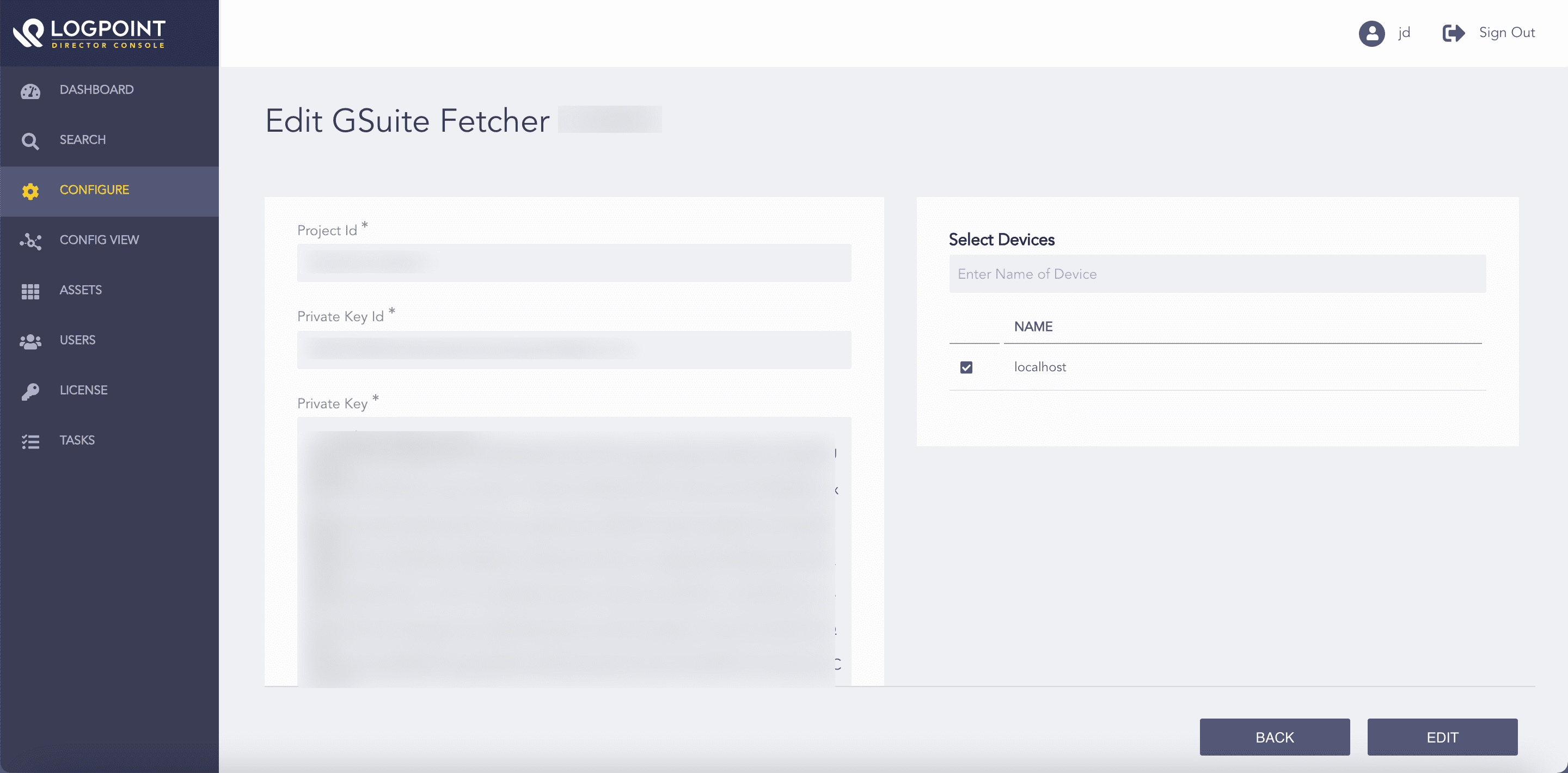
Editing a GSuite Fetcher Configuration
The Action Status of the configuration changes to Changed. You can click the Undo icon from Action to undo the changes.
Click Next.
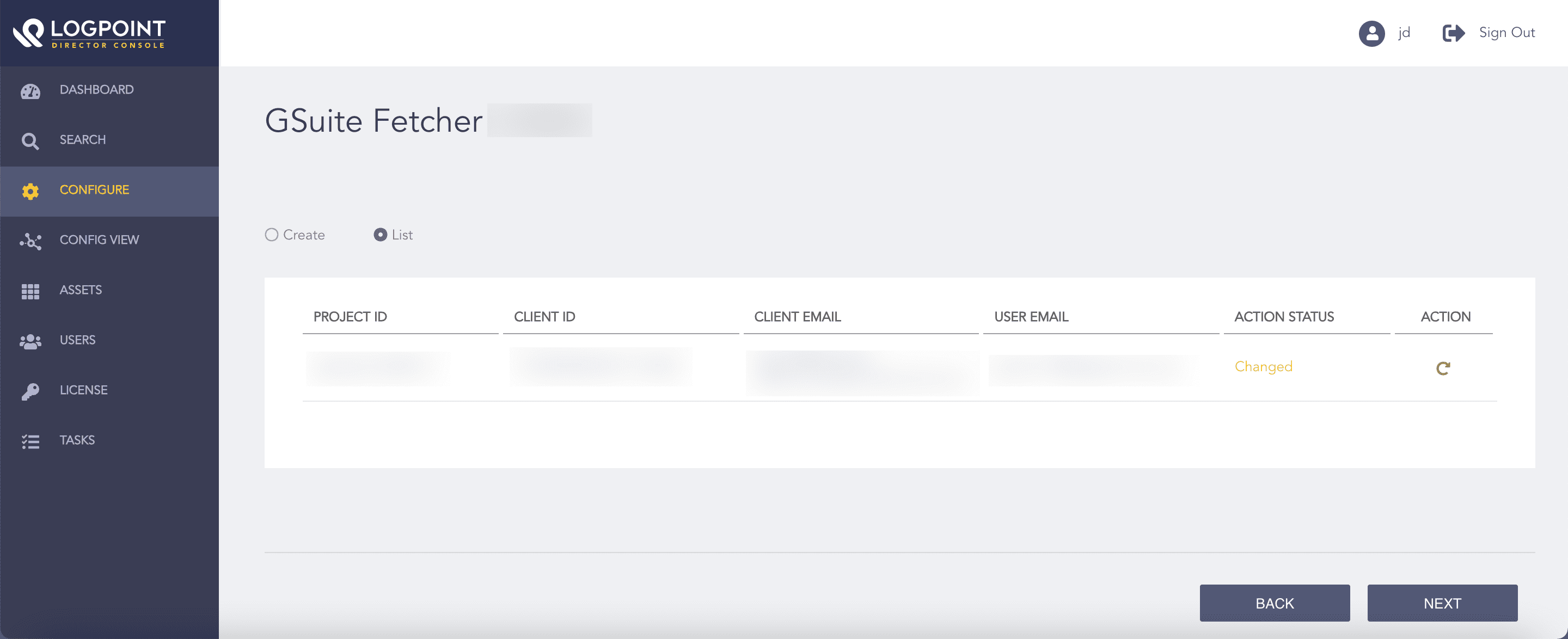
Verifying the Action Status
Review your changes. You can go Back to make any changes if necessary.
Note
Click Download Report to get the summary as a PDF.
Click Finish and click OK to confirm.
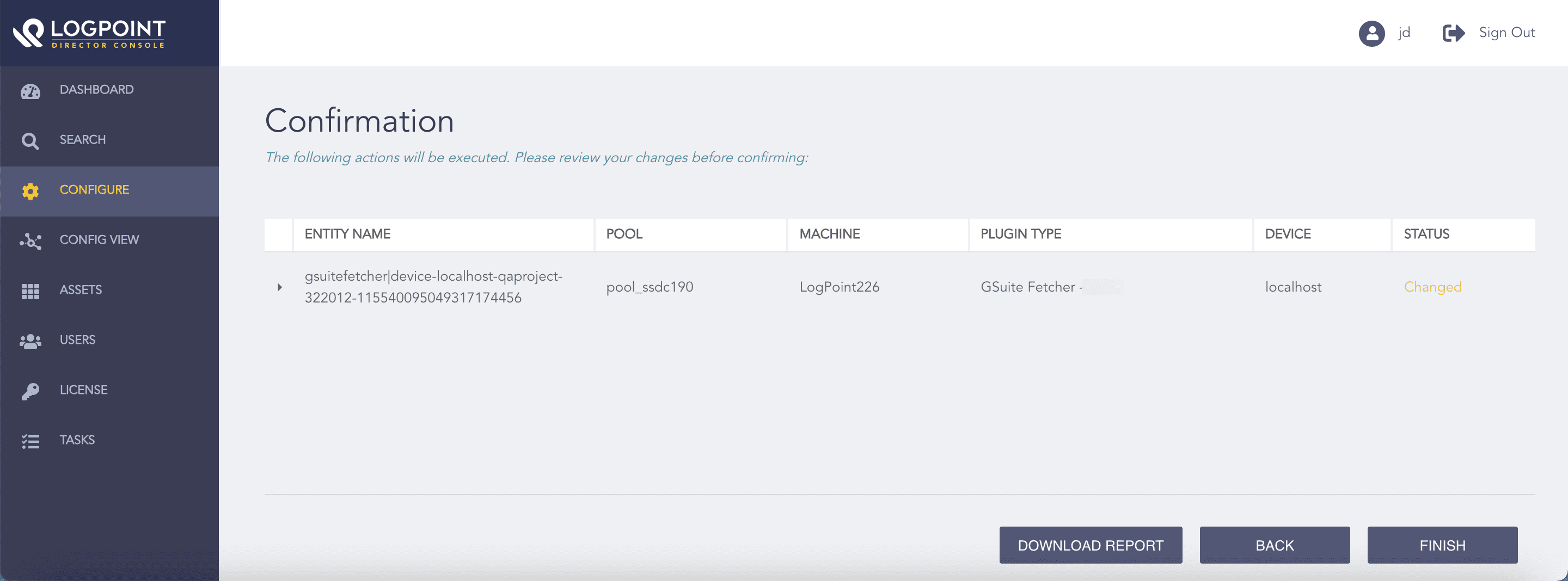
Confirming the Changes
Click Configure in the navigation bar.
Under Settings, click Plugins.
Select GSuite Fetcher from the Select Plugin Type drop-down.
Select the Logpoint where GSuite Fetcher is configured. You can select multiple machines of different pools.
Click Next.
Selecting Logpoint
Select List.
Note
The page lists only the configurations that are common to all the selected Logpoint.
Click the Delete icon for the configuration from Action.
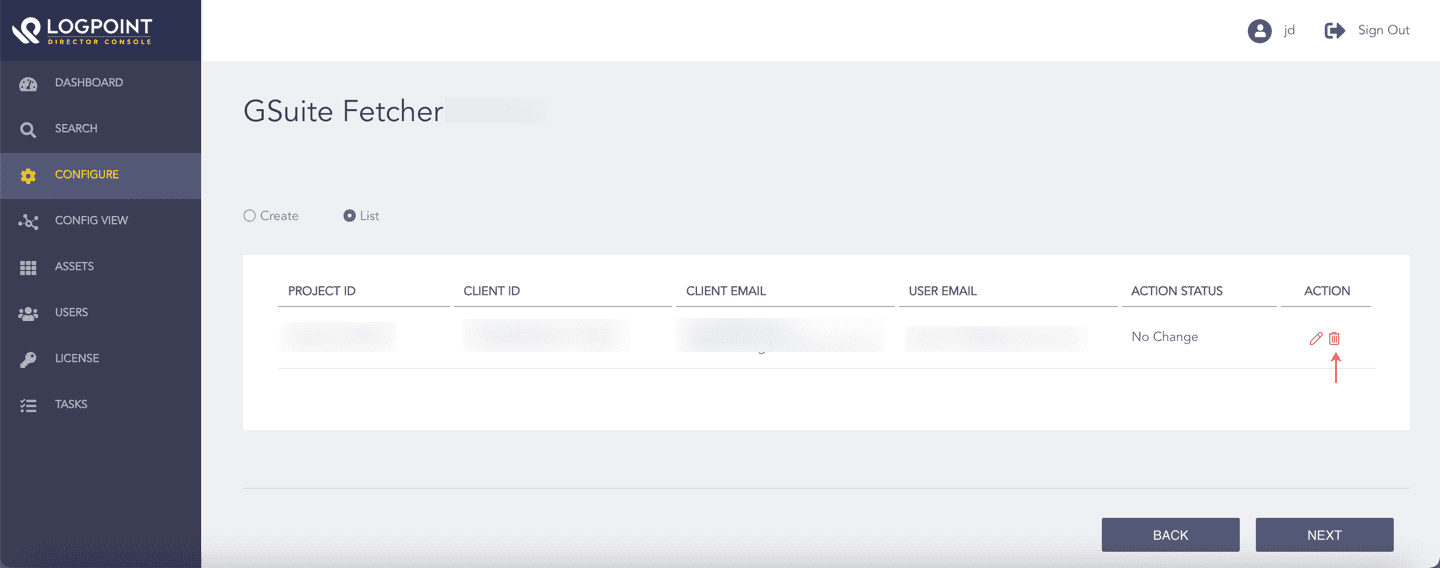
Deleting the GSuite Fetcher Configurations
The Action Status of the configuration changes to Delete. You can click the Undo icon from Action to undo the deletion.
Click Next.
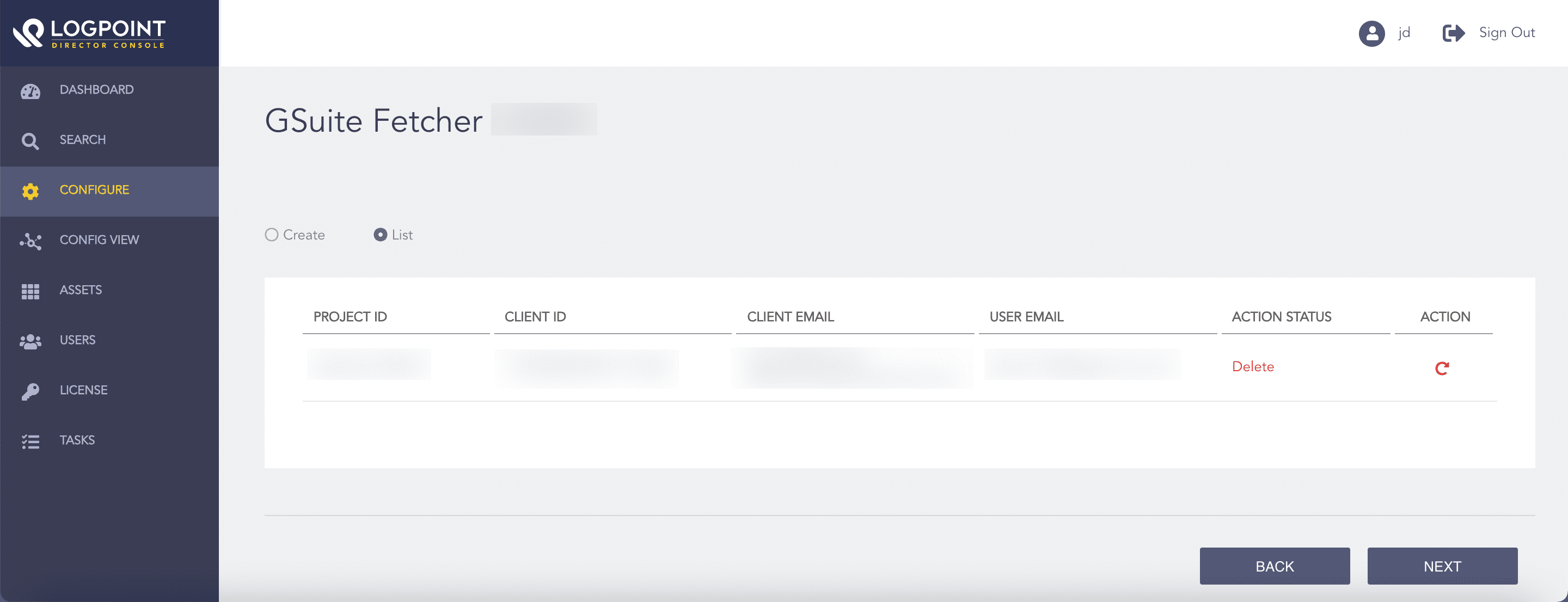
Verifying the Action Status
Review your changes. You can go Back to make any changes if necessary.
Note
Click Download Report to get the summary as a PDF.
Click Finish and click OK to confirm.
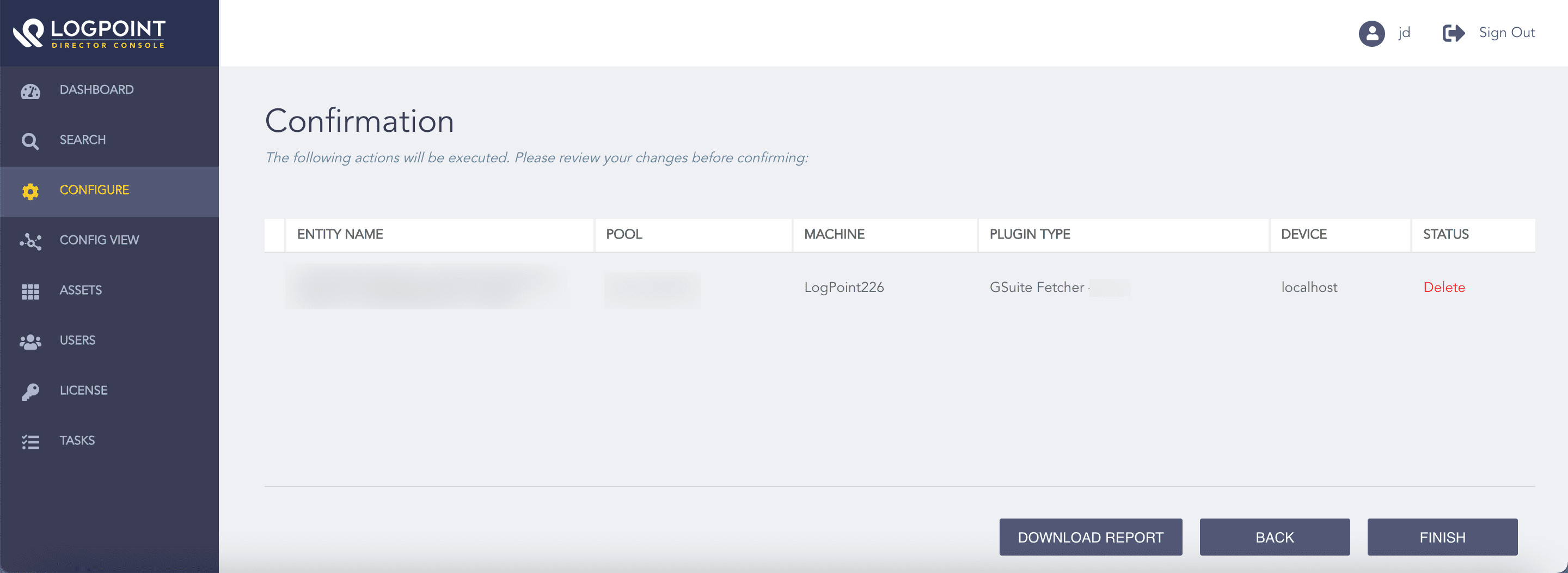
Confirming the Changes